Rolex / Datejust
Rolex Datejust
Collection profile · 1945
Introduced in 1945, the Rolex Datejust is the brand’s foundational date-display dress-sport watch: a self-winding Oyster Perpetual that helped define the modern everyday luxury wristwatch through its date window, Cyclops lens, Jubilee bracelet and enduringly versatile design.
Collection shots
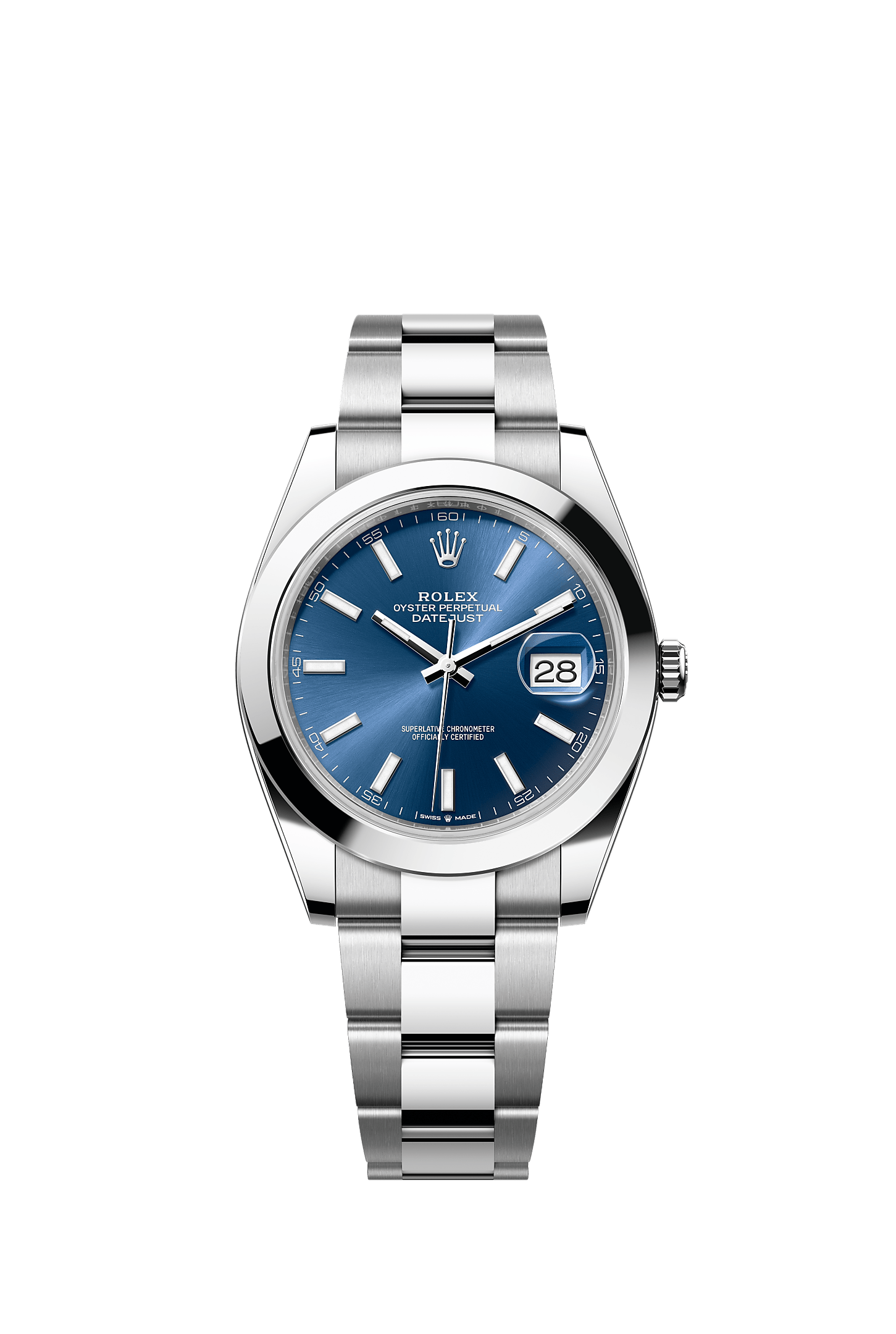
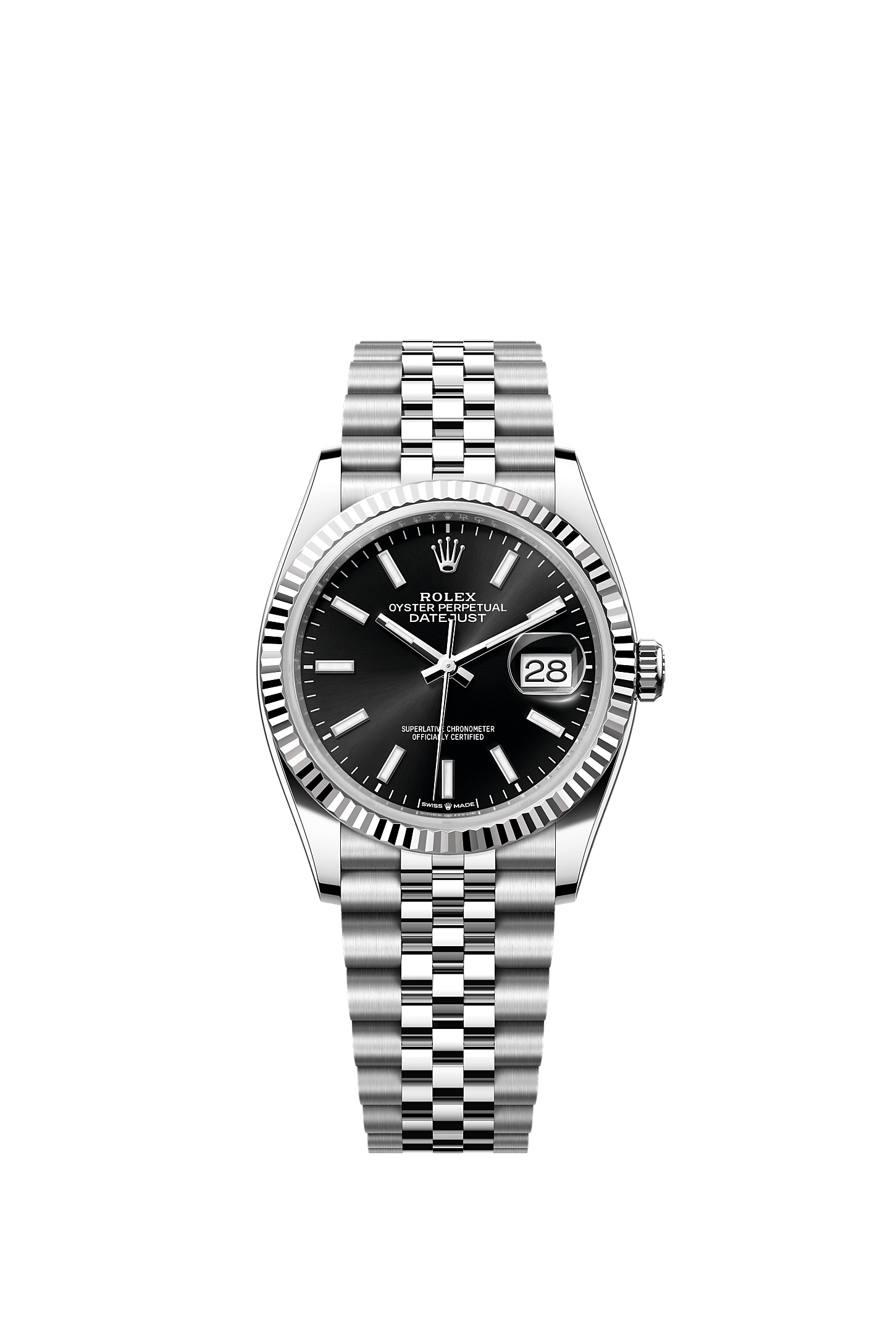
Pronunciation & name
DAY-juhst
Why it matters
The Datejust matters because it distilled Rolex’s core innovations—Oyster waterproofness, Perpetual self-winding, chronometer precision and an instantly legible date—into one highly wearable template. More than perhaps any other Rolex, it became the archetype of the versatile luxury wristwatch, equally credible as a daily wearer, formal watch, milestone gift or multigenerational heirloom.
Key references
Collection timeline
- 1945 — Rolex launches the Datejust for the company’s 40th anniversary as the first self-winding wrist chronometer with the date shown in a dial window at 3 o’clock; the Jubilee bracelet is created for it.
- 1950 — The Datejust becomes the first watch fitted with Rolex’s Cyclops lens, magnifying the date for easier reading.
- 1950 — Rolesor Datejust variants combining gold and stainless steel begin appearing in the Rolex catalogue during the 1950s, broadening the model’s appeal.
- 2019 — Rolex presents a new Datejust 31 and reintroduces ombré dial styling to the brand’s catalogue in a modern form.
- 2022 — Rolex unveils Datejust 31 models with floral-motif dials, adding an explicitly decorative contemporary expression to the collection.
- 2026 — Rolex introduces a new Datejust 41 with a green lacquer ombré dial in white Rolesor, showing the collection’s continued evolution in dial design.
News
- Datejust 31 2019 — Rolex presented a new Datejust 31 generation and highlighted the return of ombré styling to the catalogue in a contemporary form. ↗
- New watches 2022: Datejust 31 floral-motif dials 2022 — Rolex introduced three Datejust 31 models with floral-motif dials, emphasizing decorative dial-making and the calibre 2236 movement. ↗
- The new Datejust 31: Light and shade 2025 — Rolex unveiled a Datejust 31 in yellow gold with a red ombré dial, marking the first time this reintroduced ombré style appeared in a red hue. ↗
- New Datejust 41: Without a shadow of a doubt 2026 — Rolex introduced a white Rolesor Datejust 41 with a green lacquer ombré dial and calibre 3235, continuing the collection’s dial-focused evolution. ↗
Fun facts
Collector note 1
The Jubilee bracelet was created specifically for the Datejust at the model’s 1945 launch.
Collector note 2
Sir Winston Churchill and Dwight D. Eisenhower are among the notable historical figures associated with early Datejust watches.
FAQ
When was the Rolex Datejust introduced?
Rolex introduced the Datejust in 1945 to mark the company’s 40th anniversary.
Why is the Datejust historically important?
It is widely recognized as the first self-winding waterproof chronometer wristwatch to display the date in a window on the dial at 3 o’clock.
What sizes does the modern Datejust come in?
Current Datejust models are offered in multiple sizes, notably Datejust 31, Datejust 36 and Datejust 41.
What movements power modern Datejust models?
According to Rolex, Datejust 31 models use calibre 2236, while Datejust 36 and Datejust 41 models use calibre 3235.
More from Rolex
- Submariner
 — Iconic diving watch introduced in 1953, water-resistant to 300 metres, and one of the most recognised watch designs in the world.
 - Daytona
 — Chronograph originally designed for racing drivers, named after the Daytona International Speedway. Among the most sought-after watches on the secondary market.
 - Day-Date
 — Introduced in 1956, the Rolex Day-Date was the first wristwatch to display both the date and the day of the week spelled out in full on the dial. Made only in precious metals and closely tied to the President bracelet, it has become Rolex’s flagship dress watch and one of the brand’s most recognizable status pieces.
 - GMT-Master II — Rolex’s GMT-Master II is the brand’s modern dual-time travel watch, descended from the original GMT-Master created for long-haul aviation. Introduced in 1982, it added independently adjustable local-hour functionality, making it especially practical for frequent travelers crossing time zones.